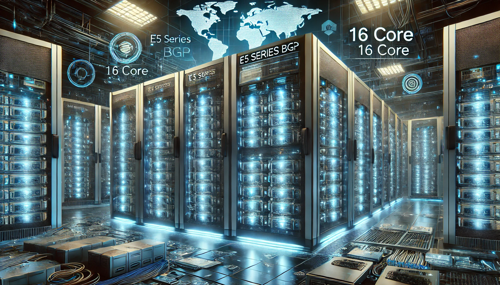
introduction: with the rapid popularity of high-density computing loads in german data centers, traditional air cooling is no longer able to meet energy efficiency and density requirements. this article focuses on the evaluation of cooling solutions and liquid cooling technology for high-density load german computer rooms, providing systematic analysis and implementation suggestions to facilitate engineering decision-making and compliance optimization.
thermal challenges of high-density loads
high-density loads bring about a significant increase in heat flux per unit area, resulting in hot spots, reduced equipment life, and increased cooling energy consumption. under germany's strict energy efficiency and environmental protection requirements, pue, heat recovery and local climate factors must be comprehensively considered to formulate a sustainable cooling strategy.
overview of german computer room processes and regulations
germany has clear regulations on building energy conservation and industrial emissions. the design of computer rooms must take into account building energy consumption standards, noise control and cooling medium management. compliance has direct constraints on cooling solution selection, coolant management and heat recovery system integration.
energy efficiency standards and compliance implications
relevant energy efficiency regulations in germany and the eu encourage data centers to prioritize the use of efficient refrigeration and heat recovery technologies. project approval, energy consumption monitoring and renewable energy use are key indicators to evaluate the long-term viability of the cooling system, which directly affects investment recovery.
key points of space layout and airflow management
computer room space constraints and cabinet density determine airflow path design, including cold aisle/hot aisle isolation, floor or top-level air distribution, enclosed racks, and localized cooling. effective airflow management can significantly reduce cooling loads and improve system stability.
comparison of common cooling solutions
common solutions include traditional air cooling, direct liquid cooling, indirect liquid cooling and hybrid systems. the comparison should be based on cooling efficiency, reliability, maintenance complexity, initial investment and heat recovery potential, combined with local electricity prices and carbon emission requirements in germany to make decisions.
air cooling applicability and limitations
air cooling technology is mature and maintenance costs are low, and it is suitable for medium-density load and strict reliability scenarios. however, in high-density cabinet scenarios, efficiency decreases, and efficient airflow management or supplementary liquid cooling is often required to avoid hot spots and soaring energy consumption.
comparison of direct liquid cooling and indirect liquid cooling
direct liquid cooling (cold plate/immersion) has high heat transfer efficiency and is suitable for extremely high-density loads; indirect liquid cooling is combined with the air system through a cold plate or heat exchanger to take into account compatibility and reliability. the two need to balance fault isolation and maintenance convenience.
evaluation of key parameters for liquid cooling technology
evaluating liquid cooling should focus on coolant heat capacity, flow control, pump and heat exchanger efficiency, temperature differential control, and system redundancy design. german computer rooms often attach great importance to the integration of heat recovery into building hvac systems to improve overall energy efficiency and reduce carbon emissions.
coolant, heat recovery and reliability design
choosing a low-corrosive, low-viscosity coolant that meets environmental regulations can help reduce maintenance risks. heat recovery systems should be designed to be modular in order to be integrated into building heating or waste heat utilization chains. redundancy and monitoring are key to ensuring reliable operation.
key points of project implementation and operation and maintenance
during the implementation process, thermal simulation, prototype trial operation and gradual expansion should be carried out to ensure that the design complies with german building and safety regulations. in terms of operation and maintenance, monitoring, preventive maintenance, leakage detection and rapid switching strategies are emphasized to reduce the risk of downtime.
strategies and geographical considerations for promotion in germany
germany's regional and climate differences affect the proportion of natural cold sources used. the northern coast and central areas can make more use of external air cooling or heat recovery, while the southern and industrial areas need to integrate grid stability and renewable energy access to formulate cooling and heating strategies.
conclusion and recommendations
summary: for german computer rooms with high-density loads, liquid cooling has obvious advantages in energy efficiency and heat recovery, but it needs to be matched with compliance design, redundancy and operation and maintenance systems. it is recommended to conduct a small-scale pilot until heat recovery and reliability are verified, and then expand on a modular basis, while maintaining air cooling as a redundant means.
- Latest articles
- Korean Group Website Advertising Strategy, Local Platform Selection And Conversion Rate Improvement
- Network Interconnection And Routing Practice Of Hong Kong Cloud Server Cn2 In Multi-cloud Architecture
- From Logs To Traceability, Tracking And Analysis Methods After Tencent Cloud Hong Kong Server Was Attacked
- Stable And Cheap Malaysian Server For Live Video Broadcast. Key Points Of Delay And Jitter Control
- Sharing The Steps, Risks And Implementation Experience Of Enterprises Migrating To Cambodian Servers Alibaba Cloud
- Complete Huawei Cloud Singapore Server Instance Creation And Environment Configuration From Scratch In One Hour
- Practical Guide To Building A Korean Cloud Server And Designing A Data Backup And Disaster Recovery Center
- Operator Comparison Analysis Of Latency And Stability Of Vietnam Vps Cn2 Different Packages
- How To Choose A Thai Cloud Server? Comparison Of Manufacturer Reputation, SLA And Technical Support
- How To Calculate Elastic Expansion Costs In The Hong Kong Server Hosting Price List Based On Business Peaks
- Popular tags
-

How To Choose A Suitable German Physical Root Server
this article will provide you with a detailed guide to choosing a suitable german physical root server, including performance, stability, security and other considerations. -

Advantages And Selection Criteria Of German Server Hosting
discuss the advantages of german server hosting and selection criteria to help businesses make informed decisions. -

Use Automated Scripts To Implement One-click Deployment And Continuous Integration Processes On German Vps Hosting
this article introduces how to use automated scripts to implement one-click deployment and continuous integration processes on german vps hosting. it covers practical suggestions for environment preparation, script design, ci/cd integration, security and monitoring. it is suitable for reference by teams and operation and maintenance engineers deploying nodes in germany.